First Look: Budget vs Premium
Maelstrom 40L (Budget Workhorse)
Premium Packs (Osprey / Deuter / Gregory)
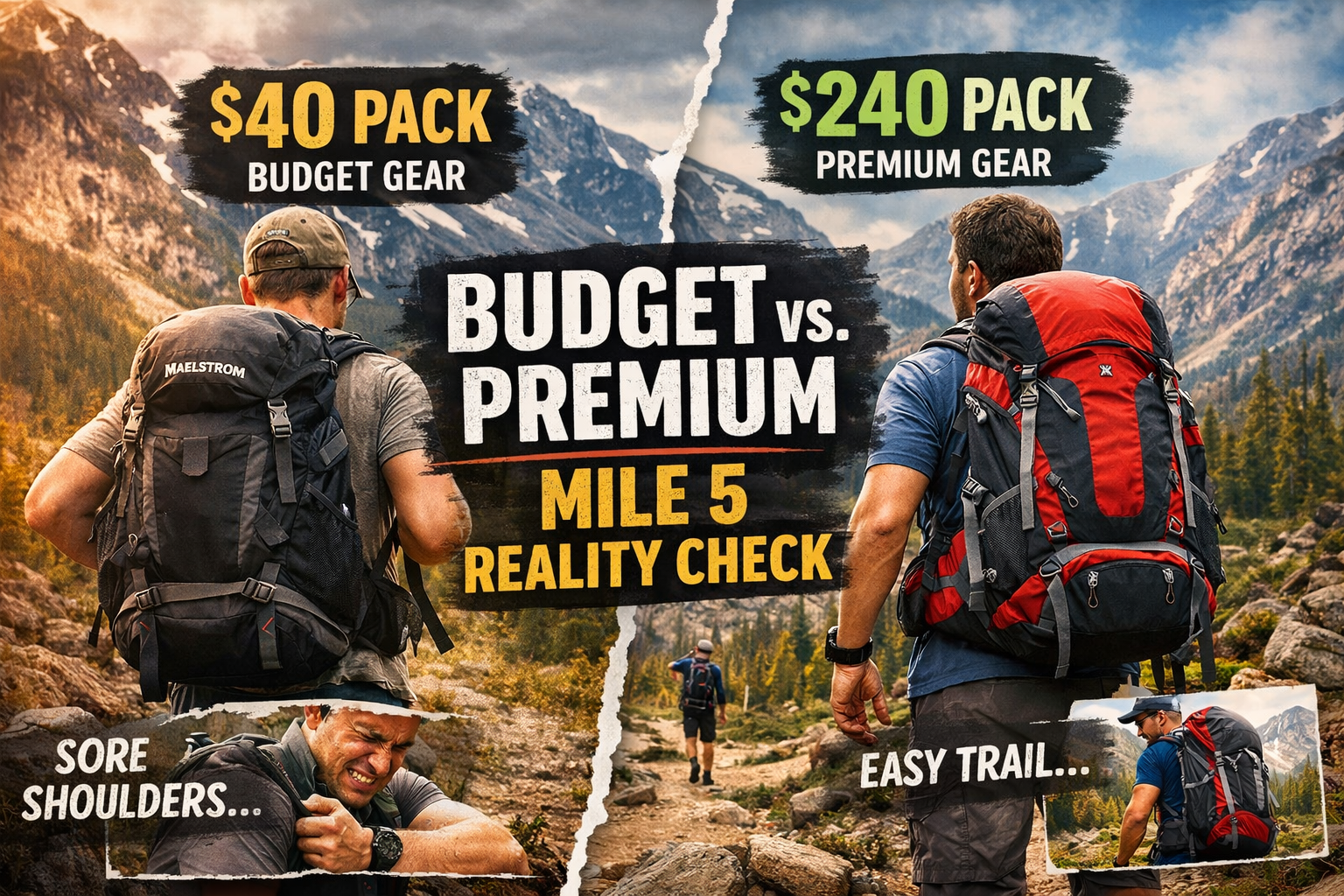
When you line up the Maelstrom 40L Hiking Backpack next to something like the Osprey Talon 44 Backpack, Deuter Futura 32 Backpack, or Gregory Zulu 40 Backpack, the differences look subtle at first glance. More straps. Slightly different shapes. Maybe a fancier back panel. But out on the trail? It’s a completely different experience.
Mile 0 vs Mile
At the trailhead, everything feels fine. You’ve got water, snacks, maybe a light layer. The Maelstrom sits comfortably enough, and you’re thinking:
“Honestly, this feels just as good as the expensive ones.”
That thought usually lasts about an hour. By mile 4 or 5—especially if there’s any incline—you start noticing the small things:
- Shoulder pressure creeping in
- The pack shifting slightly side to side
- That instinct to keep tightening straps
That’s the moment the gap shows up.
With a premium pack, you’re not really thinking about any of that. The weight settles into your hips, your posture stays upright, and your stride feels more natural. It’s less “managing your pack” and more just hiking.
What’s Actually Happening Behind the Scenes
Quick Comparison
| Category | Maelstrom 40L | Premium Packs |
|---|---|---|
| Load Transfer | Shoulders | Hips + frame |
| Stability | Moderate | High |
| Fit | Generic | Dialed-in |
| Comfort Over Time | Drops off | Stays consistent |
The Maelstrom carries weight.
Premium packs distribute weight.
That’s the whole game.
Trail Talk: Where You’ll Feel It Most
On the Climb
This is where budget packs start to show their limits. When you’re grinding uphill, every bit of inefficiency stacks up. If the weight is pulling on your shoulders instead of sitting on your hips, your upper body starts working harder than it should. With something like the Osprey Talon 44, the pack stays tight to your back, and the load lifters actually do their job. You lean forward naturally, and the pack moves with you instead of against you.
On Uneven Terrain
Think rocky sections, loose dirt, or narrow singletrack. The Maelstrom can feel a little “floaty” when fully loaded. Not dangerous—just not confidence-inspiring. The Gregory Zulu 40 really shines here. It feels planted, almost like it’s part of your center of gravity. That stability matters more than people expect, especially late in a hike when your legs are tired.
In the Heat
If you hike anywhere warm (and let’s be honest, a lot of us do), this is a big one. The Maelstrom gets the job done, but your back will be sweaty. No way around it. The Deuter Futura 32, with its suspended mesh back panel, creates actual airflow between you and the pack. It’s one of those things you don’t think about until you try it—and then it’s hard to go back.
The Real Cost Conversation
Let’s address the obvious:
- Maelstrom: ~$40
- Premium packs: $180–$280
That’s a big jump. But here’s the honest trail perspective: If you’re hiking a few times a year, the Maelstrom is the smarter buy. It gets you outside, carries your gear, and doesn’t overcomplicate things. If you’re hiking regularly—or starting to push distance, elevation, or weight—you’re not just paying for comfort. You’re paying to delay fatigue.And that changes your entire day.
So… Which One Should You Actually Buy?
Go with the Maelstrom if:
- Your hikes are under ~6–8 miles
- You’re carrying light (water, snacks, basic layers)
- You want a solid, low-cost entry point
Step Up to Premium if:
- You’re doing longer hikes or overnights
- Your pack regularly hits 20+ lbs
- You want your gear to help you, not just ride along
Final Trail Advice
Here’s the simplest way I can put it:
A budget pack like the Maelstrom gets you to the trail. A premium pack helps you enjoy the trail longer. Neither is wrong. It just depends on where you are in your hiking journey.
If you’re just getting started, the Maelstrom is a perfectly reasonable choice But if you’ve ever finished a hike thinking,
“Man… my shoulders are smoked,”
…you’re already a candidate for an upgrade—you just don’t know it yet.